
A home is not finished when the last piece of furniture arrives. It is finished when the space feels like it belongs to the people living in it. These decoration tips, drawn from the kind of thinking you will find at Decor House and Decorator Advice, will help you get there without wasting money or following trends that fade in a year.
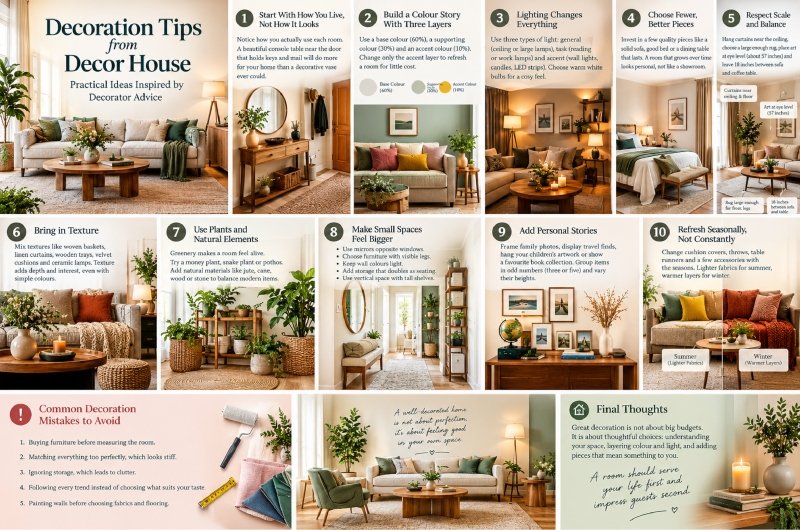
1. Start With How You Live, Not How It Looks
Before buying anything, spend a week noticing how you actually use each room. Where do you drop your keys? Which chair do you always choose? Where does clutter pile up? Good decoration solves these daily problems first. A beautiful console table near the door that holds keys and mail will do more for your home than a decorative vase ever could.
2. Build a Colour Story With Three Layers
Professional decorators rarely choose one colour for a room. They layer three:
- A base colour (60%) for walls, large rugs and sofas. Soft neutrals like warm white, sand or light grey work well.
- A supporting colour (30%) for curtains, chairs and bedding.
- An accent colour (10%) for cushions, art, candles and small objects.
The beauty of this method is that you can refresh a room by changing only the accent layer. Swap mustard cushions for teal ones and the whole mood shifts for very little cost.If you want to explore more room examples, check this 60-30-10 colour scheme guide for ideas on mixing neutrals, bold shades and accents.
3. Lighting Changes Everything
A single ceiling light makes even an expensive room feel flat. Aim for three types of light in every space: general (ceiling or large lamps), task (reading or work lamps) and accent (wall lights, candles, LED strips behind shelves). Choose warm white bulbs for living rooms and bedrooms, as they make colours and skin tones look softer and more inviting.For a room-by-room breakdown of ambient, task and accent lights, follow this layered lighting guide and plan your fixtures before you buy.
4. Choose Fewer, Better Pieces
Overfilled rooms feel smaller and tiring. Instead of buying many cheap items, invest in a few quality pieces: a solid sofa, a good bed, a dining table that lasts. Then fill the gaps slowly. Decorator Advice-style thinking encourages patience: a room that grows over time looks collected and personal, while a room bought in one weekend often looks like a showroom.
5. Respect Scale and Balance
Common mistakes include a rug that is too small, curtains hung too low and art placed too high. Some simple rules help:
- Hang curtains close to the ceiling and let them touch the floor to make walls look taller.
- Choose a rug large enough for the front legs of all seating to rest on it.
- Hang art so its centre sits at about eye level, roughly 57 inches from the floor.
- Leave about 18 inches between a sofa and a coffee table.
6. Bring in Texture
A room with only smooth surfaces feels cold. Mix textures: a woven basket, a linen curtain, a wooden tray, a velvet cushion, a ceramic lamp. Texture adds depth and interest even when your colours are very simple.
7. Use Plants and Natural Elements
Greenery makes a room feel alive. If you are a beginner, try a money plant, snake plant or pothos, which tolerate low light and irregular watering. Add natural materials like jute, cane, wood or stone to balance modern items such as glass and metal. If you are new to greenery, browse our list of indoor plantsfor home decor to find easy options that suit your light and space.
8. Make Small Spaces Feel Bigger
- Use mirrors opposite windows to bounce light.
- Choose furniture with visible legs so the floor stays visible.
- Keep wall colours light and consistent.
- Add storage that doubles as seating, such as ottomans or benches.
- Use vertical space with tall shelves rather than wide cabinets.
9. Add Personal Stories
The difference between a decorated house and a loved home is personality. Frame family photos, display travel finds, hang your children’s artwork or show a favourite book collection. Group items in odd numbers (three or five) and vary their heights for a natural, styled look.
10. Refresh Seasonally, Not Constantly
You do not need a full makeover every year. Change cushion covers, throws, table runners and a few accessories with the seasons. Lighter fabrics for summer, warmer layers for winter. This keeps your home feeling fresh while your core furniture stays the same.
Common Decoration Mistakes to Avoid
- Buying furniture before measuring the room.
- Matching everything too perfectly, which looks stiff.
- Ignoring storage, which leads to clutter that ruins any design.
- Following every trend instead of choosing what suits your taste.
- Painting walls before choosing fabrics and flooring.
Frequently Asked Questions
1. What are the best decoration tips decoradhouse from decoratoradvice for beginners?
Start with how you use each room, then choose a simple three-colour palette using the 60-30-10 rule. Add layered lighting, a few quality furniture pieces and one or two plants. Build the rest slowly instead of buying everything at once.
2. How can I make a small room look bigger?
Use light wall colours, place a mirror opposite a window, and choose furniture with visible legs. Storage that doubles as seating, such as ottomans or benches, also saves space. Tall shelves work better than wide cabinets because they use vertical space.
3. How often should I change my home decor?
You do not need a full makeover every year. Refresh cushion covers, throws, curtains and accessories with the seasons, and keep your main furniture the same. These decoration tips decoradhouse from decoratoradvice keep your home fresh without a big budget.
4. What is the most common decoration mistake?
Buying furniture before measuring the room is the most common one. Other frequent mistakes include a rug that is too small, curtains hung too low, matching everything too perfectly and ignoring storage.
Final Thoughts
Great decoration is not about big budgets. It is about thoughtful choices: understanding your space, layering colour and light, and adding pieces that mean something to you. Use these decoration tips as a starting point, take your time, and let your home develop step by step. If you remember one thing, make it this: a room should serve your life first and impress guests second.